
Exhibition history
It is always fascinating to learn about the origins of a project that is now celebrating its 35th anniversary – having successfully navigated the turbulent 1990s, the transformative 2000s, a decade of stability and even thriving during the COVID-19 era. The history of the AGRORUS International Agroindustrial Exhibition dates back to 1991 in St. Petersburg, when the Russian Farmer World Fair was first organised.
The project was launched to support the emerging farming movement, boost agricultural production and educate the public. The Fair were jointly organised by the Association of Peasant (Farm) Enterprises and Agricultural Cooperatives of Russia (AKKOR) and the Russian Farmer World Fair CJSC.
St. Petersburg and its famous Lenexpo Exhibition Complex were chosen as the venue. Mikhail Zlydnikov, President of the Russian Farmer World Fair CJSC, assembled a remarkably dedicated team of experts. These professionals not only invested their talent into the fair movement but truly lived and breathed their work. Many spent decades on the team, and even after moving to other business sectors, returned to the project years later.
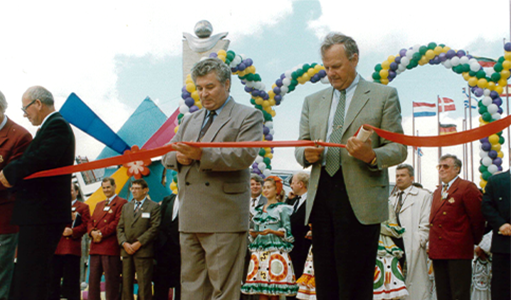
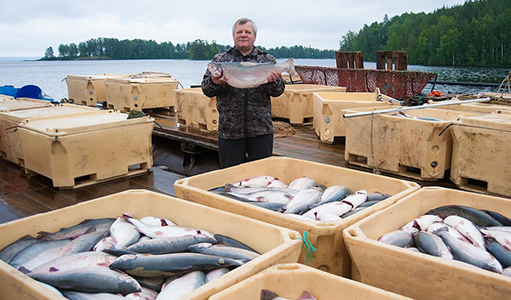
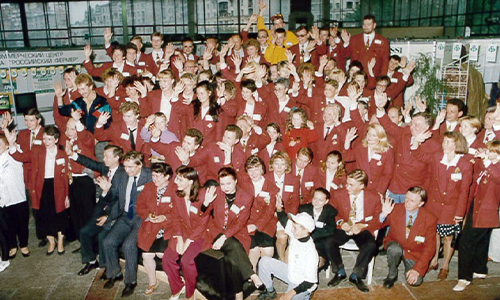
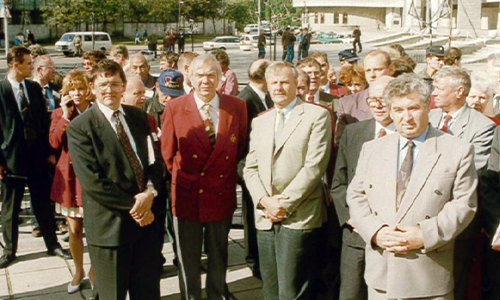
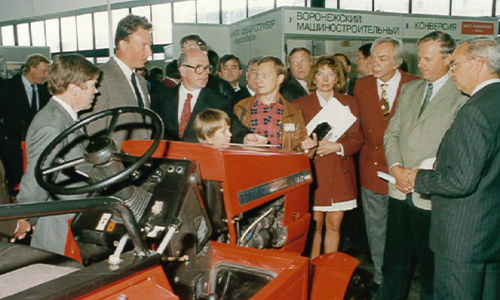
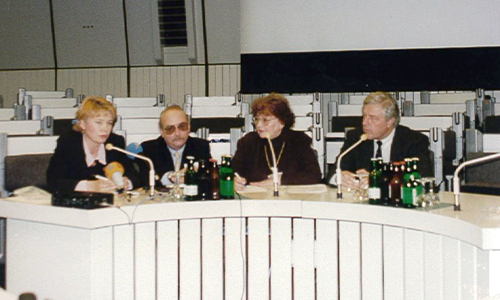
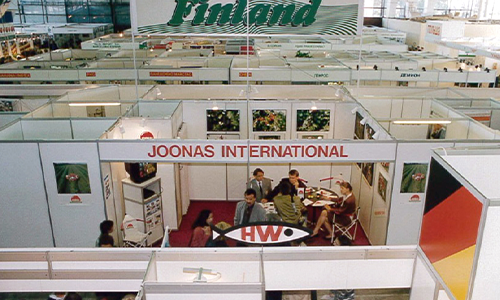
In 1992, Russian Farmer Fair debuted its very first exhibition, immediately achieving nationwide status. Farmers, along with industrial and retail executives, felt a strong need to establish interregional trade networks. Meanwhile, residents and guests of the city gained access to a wide variety of high-quality, domestic products for their tables – which, for those times, was a true celebration.
The Fair steadily grew in popularity, with prominent public figures and government officials attending every opening. Among them were Vladimir Bashmachnikov, AKKOR President, Anatoly Sobchak, City Mayor, Viktor Khlystun, Minister of Agriculture, and Aleksandr Zaveryukha, Vice-Prime Minister. The fourth annual Fair was visited by the Prime Minister himself, Viktor Chernomyrdin. In 1994, the Fair officially received the status of a federal-level event. Around the same time, the Federal Fair Committee was established with the active participation of the Ministry of Agriculture and Food.
Each year, exhibitors were treated to something unexpected. One of the photos shows Andrey Stepanov, Chairman of the St. Petersburg Trade Committee, presenting the keys to a brand-new tractor to a Golden Medal Contest winner.
The Russian Farmer World Fair continued to gain remarkable momentum. The popularity of this unique agroindustrial and food exhibition spread far beyond neighbouring regions. More than half of first-time participants booked their spots for the following year right away, becoming permanent exhibitors. The exposition now spanned all six pavilions of the Lenexpo Exhibition Complex and covered roughly 17,000 sq. m of outdoor space. Annually, the Russian Farmer Fair hosted over 600 industrial enterprises, wholesale firms, research institutes, regional branches of the Federal Food Corporation and foreign companies from more than 30 countries worldwide.
On the international stage, mutually beneficial cooperation strengthened year after year with Berlin’s premier agricultural exhibition, Green Week, which continues to be held to this day. The organising committees routinely exchanged expositions and delegations and hosted joint business events. Word of the high quality of Russian products began to spread abroad. The diversity of exhibitors was so vast that visitors could build business networks with anyone from major agricultural machinery manufacturers to amateur florists. Every year, the Fair debuted the latest breakthroughs in farming machinery, innovative technologies and advanced equipment for the production, harvesting, processing, transport, storage and packaging of agricultural goods. It also showcased the latest developments in biological products and livestock feed, genetically improved seeds, as well as frost-resistant saplings and seedlings.
Being the pride of St. Petersburg , this farming fair grew into one of the most significant events in the economic life of not only the Northwest but all of Russia. This was confirmed by the regular presence of high-ranking officials at the event. The St. Petersburg authorities, represented by Governor Vladimir Yakovlev and heads of several specialised committees, used the Fair as a venue to host meetings and business discussions with agricultural producers, moving far beyond mere formal ceremonies. The Fair’s federal status remained strong, with official opening delegations featuring Russia’s Minister of Agriculture Alexey Gordeev himself, and even Viktor Cherkesov, the Presidential Envoy to the Northwest Federal District.
Perhaps the greatest achievement of the Fair’s organisers – and the ultimate proof that their work benefited society and that the ambitious goals set back in 1991 were achievable – was the recognition the Fair received from both farmers and everyday shoppers. Everyone was involved: exhibitors paid for their space year after year, while city residents bought high-quality and often hard-to-find goods at the wholesale-retail farmers’ market operating successfully within the exhibition complex and nearby local markets. For everyone involved, including the government, it was obvious that the Fair had become an excellent platform for direct contact between agricultural producers and consumers.
To support agribusiness, the organisers worked alongside the authorities to secure logistics subsidies. This guaranteed that farmers could bring in fresh produce – vegetables, fruits, honey and bee products, cheeses, dairy and meat – for wholesale and retail trade. Selling directly to consumers without middlemen allowed them to offer prices lower than supermarkets while still fully covering their expenses and turning a healthy profit. The St. Petersburg Russian Farmer World Fair became so popular that its model was replicated in other regions, including Rostov-on-Don, Kazan, Chelyabinsk, Kemerovo and Yuzhno-Sakhalinsk. Weekend farmers’ markets began popping up across many regions of Russia.
Like any business project after five or six years of successful development, the Russian Farmer Fair became highly profitable. By the end of its first decade, Russia’s pioneering agroindustrial fair was, as the saying goes, at the peak of its game. However, state support was still essential, and it was received, though in a rather unexpected way. It turned out that under market conditions, building a business from scratch and getting it off the ground is only half the battle. The real challenge is proving that you have what it takes, and the right, to stay in business.
To be continued…


